
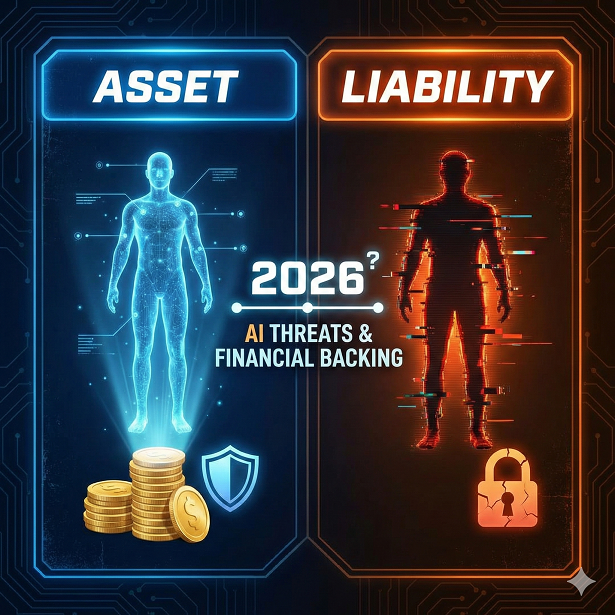

Navigating the digital landscape of 2026 requires more than just vigilance; it demands a robust understanding of deepfake technology and its inherent risks. Securing Professional Indemnity for AI is no longer a luxury but a fundamental necessity for any organization relying on digital media or communication.
The speed and sophistication of generative AI have created an unprecedented threat environment. Identifying whether a video, audio recording, or image is fabricated is the first line of defense against catastrophic financial and reputational damage. We must look beyond the surface to protect our interests.
This ultimate guide provides 7 easy steps to detect synthetic media, ensuring your company remains secure in a world saturated with hyper-realistic fakes.
The Business Threat: Why Professional Indemnity for AI is Crucial
In 2026, deepfakes pose a direct threat to corporate solvency and public trust. A single fabricated video featuring a CEO making damaging statements can wipe billions off a market capitalization in minutes. The initial chaos requires immediate, validated verification.
This is precisely where the conversation around Professional Indemnity for AI becomes critical. This insurance protects against claims arising from negligence, error, or omission, especially when AI systems are involved in content creation or verification processes.
If your firm is targeted by a deepfake and suffers losses, your ability to prove the media was fake—and the steps taken to mitigate the damage—is paramount. Indemnity coverage acts as the financial firewall when your digital reputation is under attack.
Understanding Cyber Underwriting 2026
The insurance industry has radically adapted to the deepfake menace. Cyber Underwriting 2026 models now heavily scrutinize an organization’s internal deepfake detection protocols before offering coverage.
Insurers recognize that relying solely on human judgment is insufficient. They want to see layered technological defenses and clear response plans for synthetic attacks.
If you cannot demonstrate a proven detection strategy, your premiums will skyrocket, or coverage might be limited entirely. Verification is now inseparable from risk assessment.
Layer 1: The Ultimate Human Detection Checklist
Before relying on complex AI software, start with these 7 fundamental human observation checks. These steps can quickly flag obvious inconsistencies that AI generators often miss, even in 2026.
Step 1: Focus on the Eyes and Gaze. Deepfake subjects often have unnatural or inconsistent eye movements. Look for a lack of blinking or a strange, fixed stare that doesn’t follow typical human patterns of attention.
Step 2: Examine the Skin and Facial Edges. Real skin has natural imperfections, pores, and subtle discoloration. Deepfakes often present overly smooth, waxy skin or a slight, unnatural blurring around the edges of the face where the synthetic media meets the original video.
Step 3: Analyze Audio and Lip-Sync Discrepancies. Even the best audio synthesis can struggle with perfect synchronization. Listen for subtle metallic echoes, unusual pitch changes, or sound that doesn’t quite match the speaker’s mouth movements.
Step 4: Watch for Inconsistent Lighting and Shadows. Deepfake models frequently fail to render realistic shadows, especially in complex environments. If the face is perfectly lit, but the rest of the scene is dark, that’s a red flag. Look for shadows that appear to move independently of the subject.
Step 5: Check the Background Stability. Generative AI focuses heavily on the main subject, often leading to strange flickering or warping in the background. Pay attention to distant objects, furniture, or door frames for unnatural distortion.
Step 6: Scrutinize Accessories and Jewelry. Small, complex details like earrings, glasses, or hair flowing in the wind are difficult for AI to maintain consistently. Look for geometric errors or items that disappear and reappear within the frame.
Step 7: Evaluate Emotional Consistency and Subtlety. Deepfake expressions are often exaggerated or flat, lacking the nuanced transitions of genuine human emotion. If the person looks angry but their eyes convey nothing, proceed with extreme caution.
Analyzing Visual Artifacts in Media Liability Insurance Cases
The severity of deepfake attacks directly impacts Media Liability Insurance claims. If a publisher or broadcaster is accused of defamation via synthetic media, the defense often hinges on artifact analysis.
Artifacts are the digital fingerprints left by the generation process. These include compression artifacts, inconsistent pixel density, or slight color mismatches that are invisible to the naked eye but clear to forensic tools.
In the context of litigation, documenting these artifacts is essential for proving that the content originated from a generative model and not a genuine source. This detailed analysis forms the foundation of a successful insurance defense.
Layer 2: Advanced AI Detection Tools in 2026
Human observation is a starting point, but 2026 demands AI-driven verification. Specialized forensic software uses neural networks trained on millions of synthetic and real media samples to identify algorithmic tells.
These sophisticated tools look for things like unique generator signatures, inconsistent head pose estimations, and subtle temporal irregularities within video frames. They can often identify the specific model family—or even the version—of the AI used to create the fake.
Staying current with these technologies is vital. If you want to explore the cutting edge of verification technology, you might want to review our guide on the Best AI Tools in 2026 for specialized applications in media analysis.
Furthermore, major platforms are implementing cryptographic watermarking. By 2026, many legitimate media sources are expected to carry invisible, verifiable markers that prove their authenticity, making unmarked content automatically suspicious.
Proactive Reputation Risk Management Through Verification
True Reputation Risk Management involves moving beyond reactive damage control. It requires establishing clear, documented verification workflows before a crisis hits.
Every firm handling sensitive data or public messaging must designate a verification team. This team should utilize deep packet inspection and forensic tools to establish media provenance immediately upon release.
A proven verification process is the best defense in the court of public opinion. When a crisis breaks, you need to issue a definitive, evidence-based denial rather than vague skepticism.
For organizations worried about the impact of synthetic content on their liability profiles, understanding the nuances of prevention and mitigation is key. We have a detailed resource that explores synthetic media insurance: The Ultimate 7 Steps for Amazing Reputation Risk Mitigation 2026.
The scale of the threat is recognized globally. According to reports cited by Forbes, the financial damage from deepfakes and associated fraud is projected to reach tens of billions of dollars annually by the end of the decade. This emphasizes why detection is paramount. The threat landscape continues to evolve rapidly.
Securing Business Insurance Quotes Against Synthetic Attacks
When seeking Business Insurance Quotes today, underwriters are extremely focused on digital hygiene. They want to know your defense capabilities against sophisticated, targeted deepfake attacks.
To obtain favorable rates and comprehensive coverage, businesses must articulate how they utilize modern AI verification methods. This includes leveraging sophisticated models, such as those discussed when Decoding the Google Gemini Models for forensic applications.
Presenting a proactive security posture, including the 7 steps detailed here, demonstrates due diligence. This due diligence is the cornerstone of effective risk transfer in the 2026 marketplace.
Insurance isn’t a replacement for prevention; it’s the safety net when prevention inevitably fails against highly resourced adversaries. Prove you can detect fakes, and your insurance profile improves dramatically.
The Future of Deepfake Detection and Mitigation
The arms race between generative AI and detection technology shows no signs of slowing down. As deepfakes become more photorealistic, detection will rely less on visible artifacts and more on embedded cryptographic signatures and behavioral biometrics.
Organizations must adopt a continuous learning approach, regularly updating their detection software and training staff on the latest synthetic media trends. Complacency is the deepest vulnerability in the age of AI.
Ultimately, strong detection processes underpin financial security. By integrating these 7 easy steps into your operational security, you not only protect your reputation but also reinforce the necessity and effectiveness of your Professional Indemnity for AI coverage.